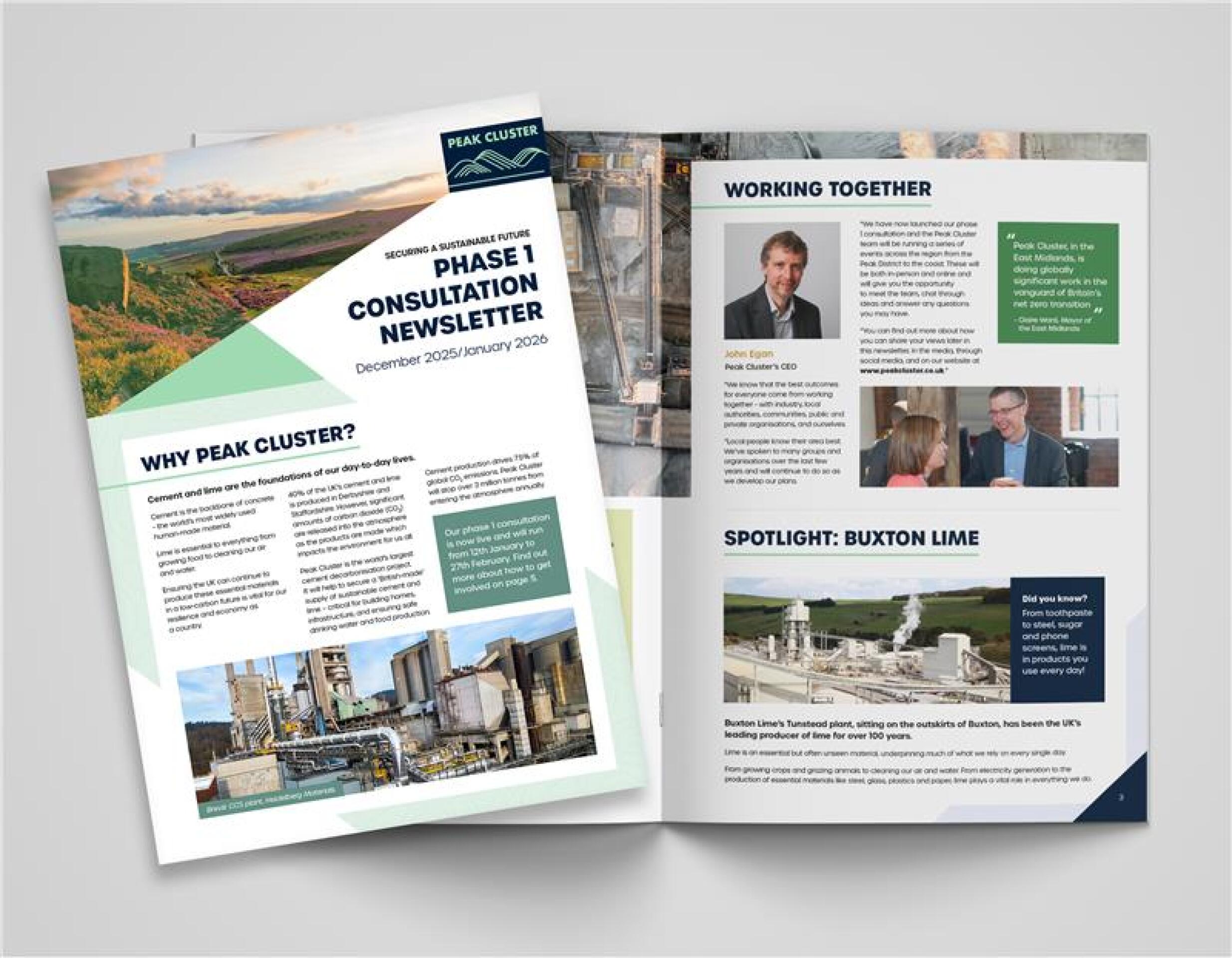
Thank you for visiting our consultation hub for Peak Cluster
Project boundary update additional consultation now live
We’re now inviting feedback from communities and stakeholders on updated proposals for Peak Cluster
From 12 November to 18 December 2026 we’re seeking feedback on refinements to the project's proposed boundary, updated pipeline route, and the locations of above ground installations, block valve stations, and temporary construction areas and access roads in most locations.
About Peak Cluster
Peak Cluster is helping to secure the future of Britain’s cement and lime production industry. The project will help to protect existing jobs, and create new roles, while ensuring a reliable and sustainable supply of essential building materials for hospitals, homes, railways, and roads. It will also deliver a home-grown source of low-carbon lime—vital for purifying our drinking water and maintaining healthy soils for grazing livestock and growing crops.
The UK's cement and lime industry, concentrated in Derbyshire and Staffordshire, produces around 40% of the nation's supply. However, the manufacturing process releases significant amounts of carbon dioxide (CO2) the majority of which comes from the raw materials used.
To tackle this challenge, four leading cement and lime producers have joined forces to deliver Peak Cluster. Using proven carbon capture and storage (Carbon Capture and Storage) technology, the project will capture CO2 emissions at source and transport them via a new pipeline for safe, permanent storage beneath the East Irish seabed.
For more information about the project, why we need to deliver it, and those involved in its delivery, check out our project website here.
Project benefits
Peak Cluster will unlock a range of positive impacts – both locally and nationally including:

How it works
Peak Cluster will use a technology called carbon capture and storage (CCS) to reduce the CO2 emitted as cement and lime are produced, from entering the atmosphere. The CCS process captures the carbon dioxide emissions at their source, before transporting through an underground pipeline to a secure storage site. The CO2, which is currently emitted into the atmosphere when cement and lime are produced, will be captured in purpose-built facilities situated on the cement and lime plants. It will then be compressed so that it can be transported safely by new, purpose-built underground pipelines to Morecambe Net Zero for permanent offshore storage under the East Irish seabed.
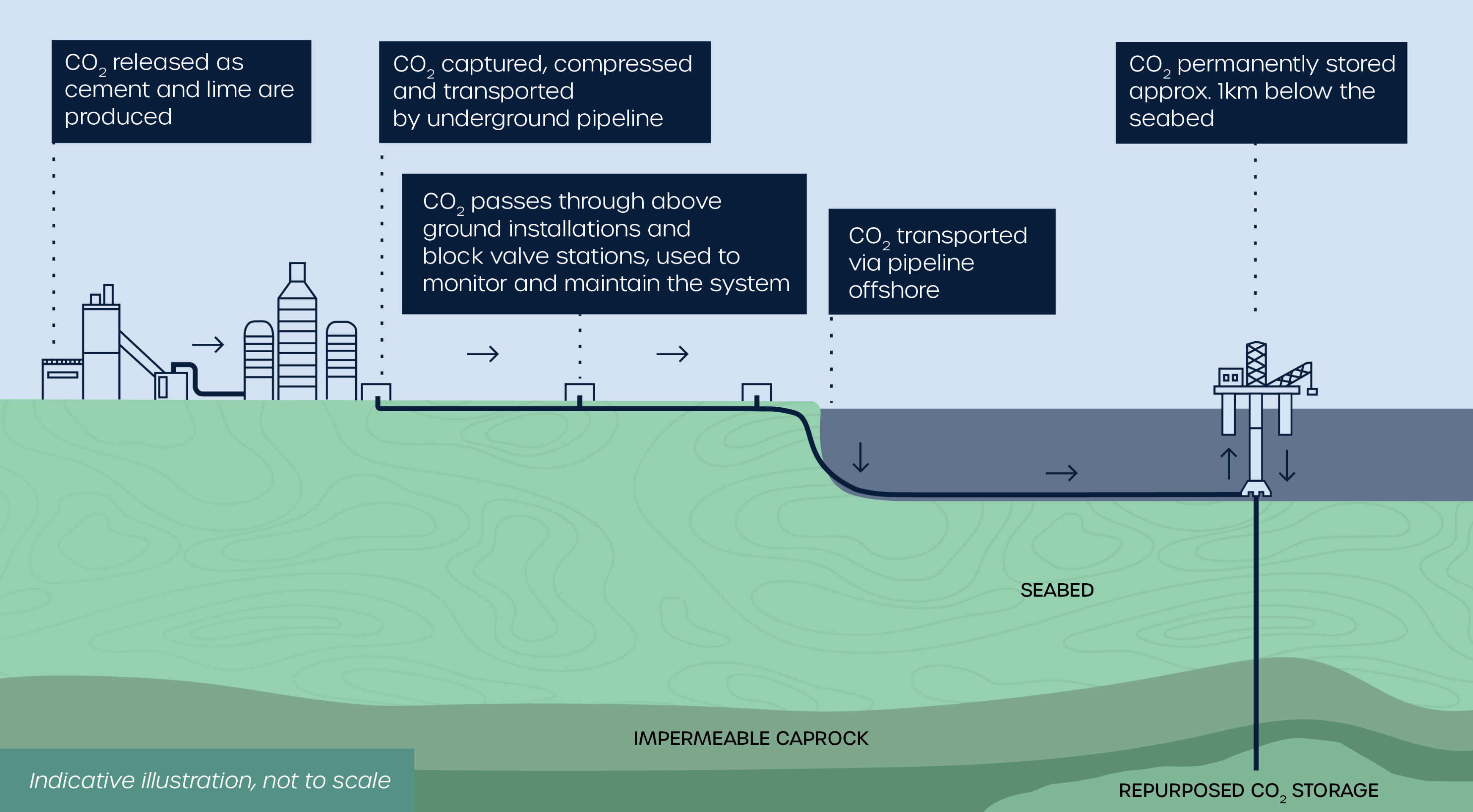
More information on the project, carbon capture and storage, the project infrastructure, cement and lime, our approach to protecting the environment, the planning process and the construction process is available in our ‘your questions answered’ of the main website, here.
Sign up to our newsletter
If you would like to stay updated on the project, please enter your name and email address below.